A cement silo is a large storage container used to store bulk cement safely at concrete batching plants, construction sites and cement-processing facilities. It protects the cement from moisture, contamination and material loss.
Cement is transferred into the silo through a filling pipe using pneumatic pressure from a bulk cement tanker. The stored cement is discharged from the bottom cone through a butterfly valve and screw conveyor for use in a concrete batching plant.
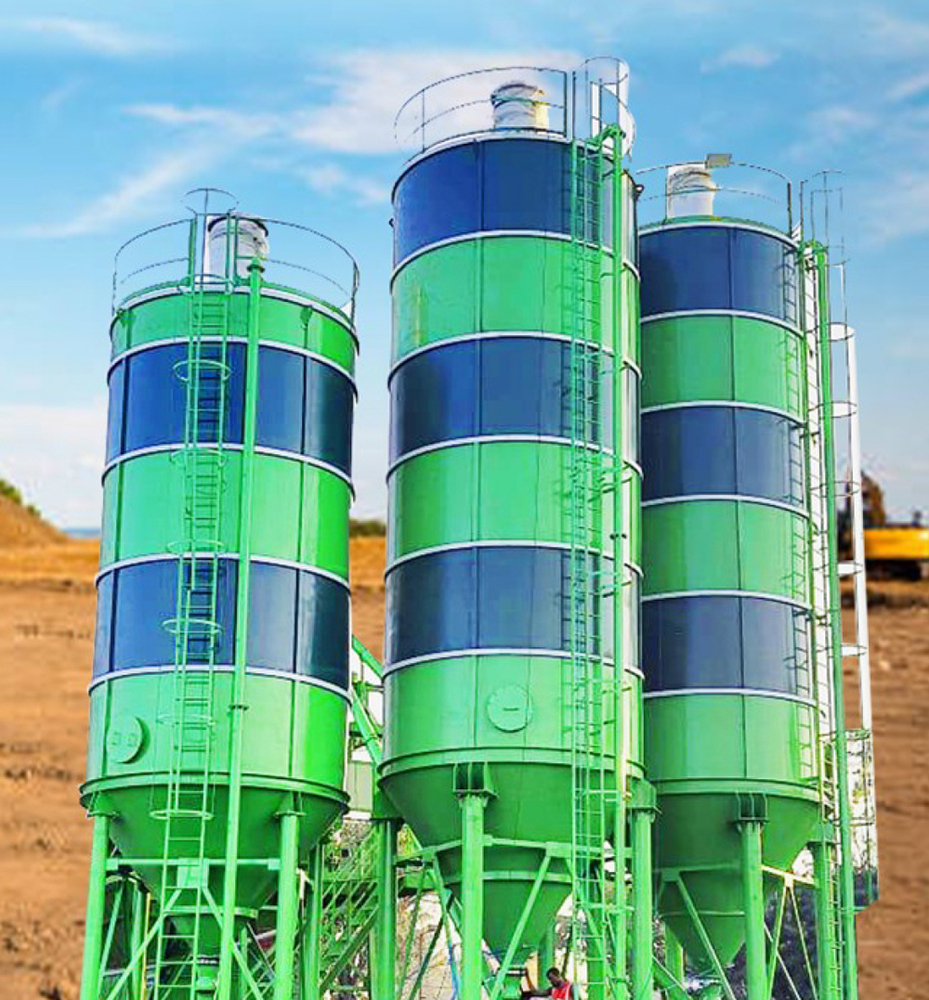
A cement silo is mainly used for the bulk storage of cement required for concrete production. It can also be designed to store fly ash, lime, GGBS and other dry powder materials.
The price of a cement silo depends on its storage capacity, plate thickness, material grade, design type, accessories, transportation and installation requirements. Customers should share the required capacity and site location to receive an accurate quotation.
The correct capacity depends on the daily cement consumption, batching plant production capacity, cement delivery frequency and available installation space. Common cement silo capacities include 30 tonnes, 50 tonnes, 60 tonnes, 80 tonnes, 100 tonnes, 120 tonnes, 150 tonnes and 200 tonnes.
Cement silos are commonly manufactured in capacities ranging from 30 tonnes to 200 tonnes. Larger and customized silos can also be manufactured according to the customers storage requirement and site conditions.
A 100-ton cement silo is designed to store approximately 100 tonnes of bulk cement under suitable operating conditions. The actual usable storage may vary depending on cement density, filling level and safety allowance.
Cement silo capacity is calculated using the internal storage volume and the bulk density of cement. The cone section, cylindrical body and required free space at the top must also be considered while calculating the usable capacity.
Cement silo dimensions depend on the required storage capacity, diameter, height, plate thickness and structural design. The final dimensions are selected according to transportation limitations, available site space and foundation conditions.
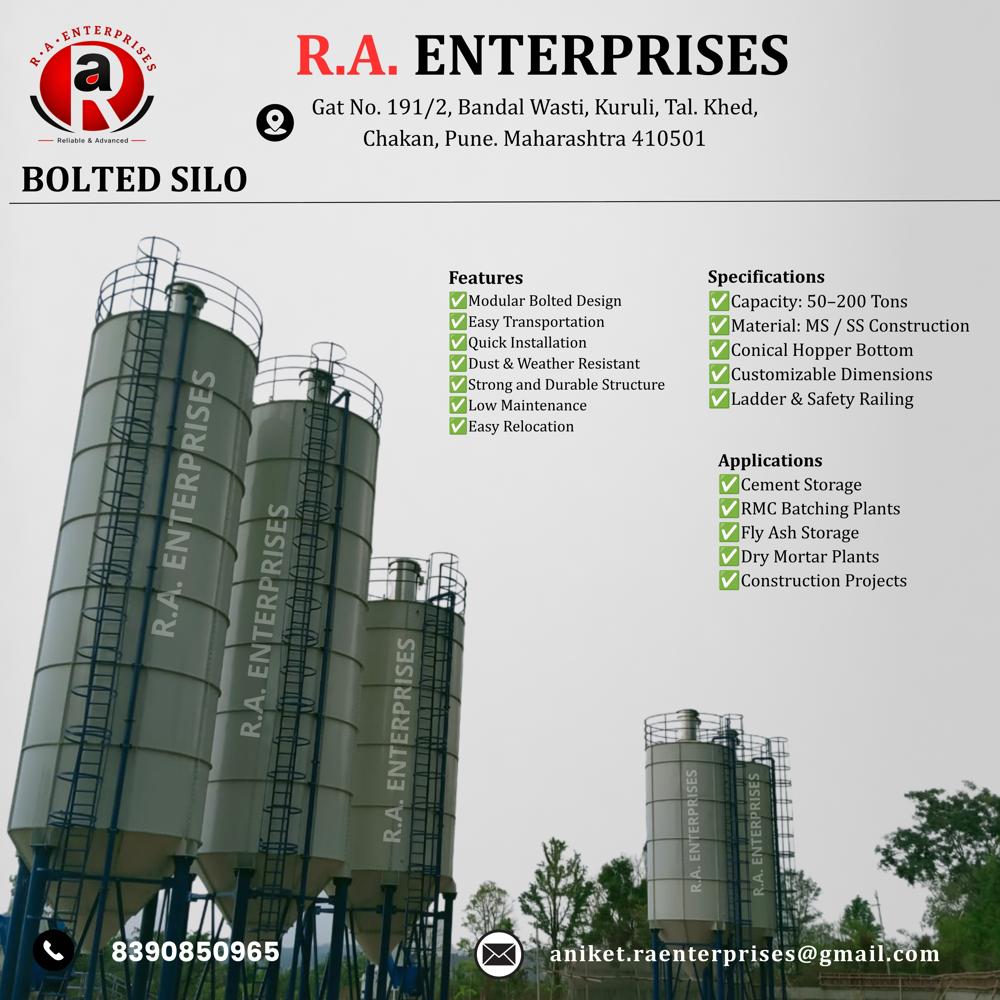
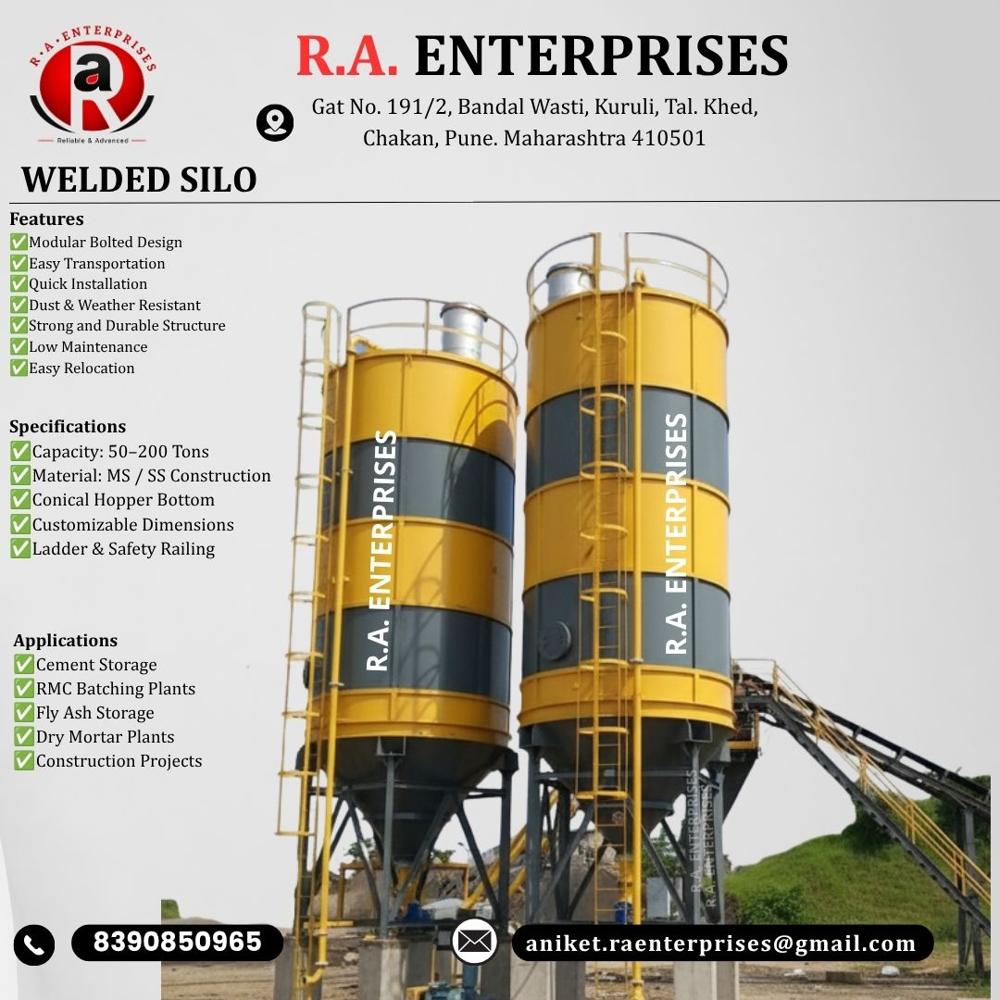
A welded cement silo is manufactured as a single structure and is suitable when transportation and site access are convenient. A bolted cement silo is manufactured in sections and assembled at the site, making it easier to transport over long distances.
Both designs are reliable when properly manufactured. Welded silos are suitable for nearby sites and faster installation, while bolted silos are generally preferred for long-distance transportation, export projects and locations with restricted access.
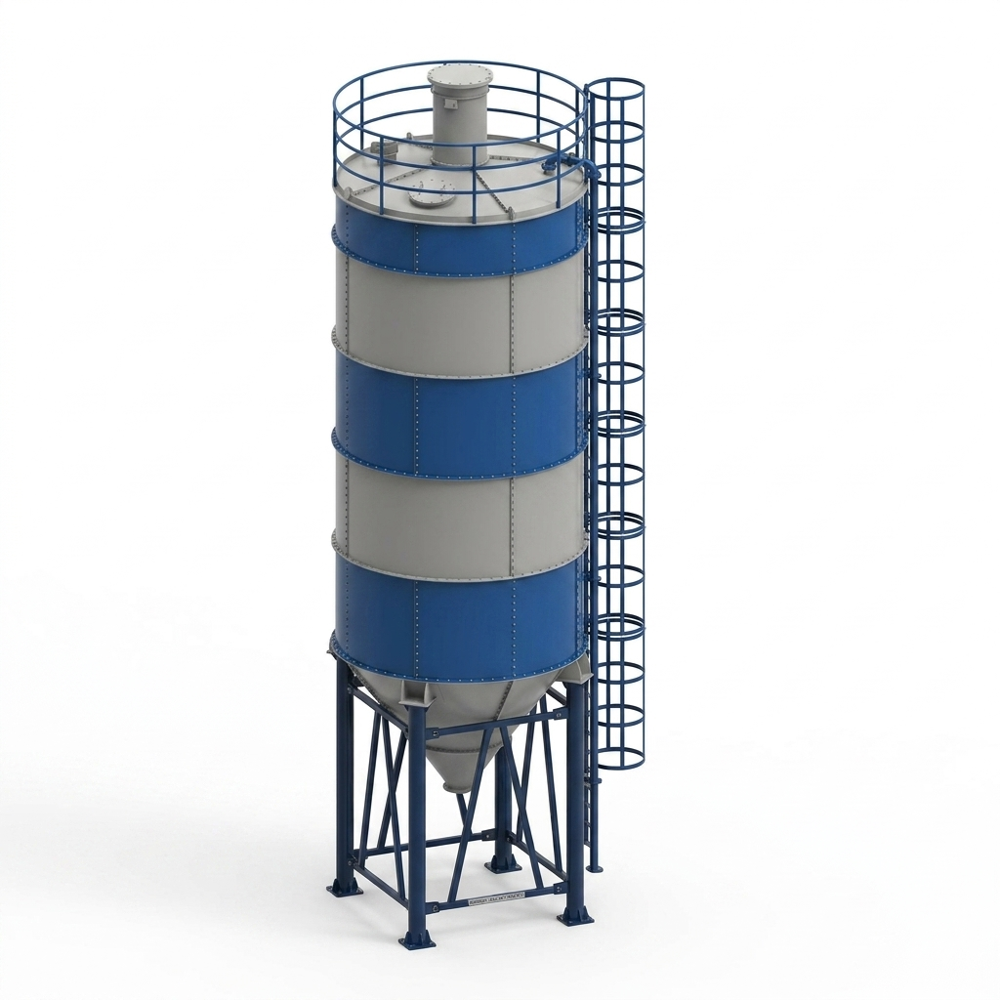
Common cement silo accessories include a silo dust collector, pressure relief valve, level indicator, aeration system, butterfly valve, filling pipe, maintenance platform, ladder, screw conveyor and supporting structure.
A silo dust collector captures cement dust released during pneumatic filling. It helps reduce air pollution, prevents material loss and maintains safe pressure inside the cement silo.
A pressure relief valve protects the silo from excessive positive or negative pressure during filling and discharge. It is an important safety component that helps prevent structural damage to the silo.
Cement is normally loaded from a bulk cement tanker through a filling pipe using compressed air. The dust collector filters the displaced air while the level indicator monitors the quantity of cement inside the silo.
Cement flows through the conical bottom of the silo and passes through a butterfly valve. It is then transferred to the batching plant using a screw conveyor or another suitable material-handling system.
Cement blockage can be reduced by using a properly designed cone angle, aeration pads, air jets or vibrators. The cement must also be protected from moisture, and the discharge system should be inspected regularly.
The silo must have a properly sealed body, weatherproof top cover, sealed inlet connections and a reliable pressure relief system. Regular inspection of gaskets, welding joints and access covers helps prevent water and moisture from entering the silo.
The foundation design depends on the silo capacity, total operating weight, wind load, seismic conditions and soil-bearing capacity. A qualified structural or civil engineer should approve the foundation and anchor-bolt design before installation.
Yes. A suitably designed silo can store fly ash, lime, GGBS, gypsum and other dry powder materials. The material properties, bulk density, flow characteristics and moisture sensitivity must be considered during design.
The silo and its accessories should be inspected regularly. Maintenance should include checking the dust collector, pressure relief valve, level indicator, butterfly valve, aeration system, screw conveyor, bolts, welding joints and supporting structure.
Before cleaning, the silo must be completely isolated and all safety procedures must be followed. Remaining cement should be removed carefully, and internal cleaning should only be carried out by trained personnel using proper confined-space safety equipment.
Manufacturing time depends on the silo capacity, design type, accessories, customization and current production schedule. The manufacturer can confirm the delivery period after reviewing the technical requirements.
Customers should provide the required storage capacity, material to be stored, batching plant capacity, site location, preferred silo type, discharge height, screw conveyor requirement and accessories required.
Choose a manufacturer with experience in cement silo fabrication, proper engineering capability, quality welding, suitable material thickness, reliable accessories and installation support. The manufacturer should also understand transportation and site requirements.
Yes. RA Enterprises manufactures cement silos according to the customers required capacity, site space, discharge height, transportation conditions and batching plant configuration.
RA Enterprises can supply cement silo components and accessories such as silo dust collectors, pressure relief valve covers, screw conveyors, storage hoppers, platforms, ladders and other batching plant equipment based on project requirements.
Installation requirements can be discussed according to the silo design, project location and site conditions. Customers should share their complete technical and location details while requesting a quotation.
RA Enterprises manufactures and supplies cement silos and batching plant equipment from the Pune region. Customers can contact the company with their required capacity, site location and technical requirements for a quotation.
Send us your required silo capacity, material to be stored, project location, discharge height and accessories required. Our team will review the details and provide a suitable technical and commercial quotation.


Price:
Price 450000 INR / Unit
Minimum Order Quantity : 1 Unit
Finish : Painted
Material : Steel
Warranty : Yes
Usage : Storage
Price 310000.00 INR / Unit
Minimum Order Quantity : 1 Unit
Finish : Painted
Material : Steel
Warranty : Yes
Usage : Storage