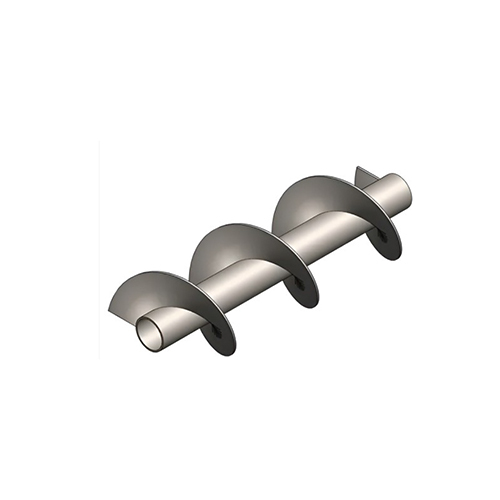
Cast Iron Internal Screw

Cast Iron Internal Screw

Price 3100.0 INR/ Meter

MOQ : 1 Meter

Cast Iron Internal Screw Specification

  • Surface Finish
  • Polished
  • Features
  • High Quality
  • Material
  • MS
  • Size
  • Various
  • Weight
  • Differ as per size Kilograms (kg)
  • Warranty
  • Yes
  • Usage & Applications
  • Industrial
 

Cast Iron Internal Screw Trade Information

  • Minimum Order Quantity
  • 1 Meter
  • Payment Terms
  • Cash in Advance (CID)
  • Supply Ability
  • 100 Per Month
  • Delivery Time
  • 30 Days
  • Main Domestic Market
  • All India
 

Cast Iron Internal Screw About


The Cast Iron Internal Screw is designed for industrial-grade applications, ensuring exceptional reliability and durability. Crafted from high-quality MS (Mild Steel) material, it provides robust performance for heavy-duty tasks. Its polished surface finish enhances resistance to wear and corrosion, extending its lifespan and maintaining its functional integrity. This product is available in various sizes to meet diverse industrial requirements effectively. The weight of the screw differs depending on the selected size, making it adaptable for specific applications. Supported with an assured warranty, this screw stands out as an ideal choice for industries requiring consistent and secure fastening solutions. With meticulous attention to surface finishing and quality construction, the Cast Iron Internal Screw delivers dependable results for demanding operational environments.

FAQs of Cast Iron Internal Screw:

Frequently Asked Questions About Screw Conveyor Flights and Internal Screws

1. What is a screw conveyor flight?

A screw conveyor flight is the helical steel blade that rotates inside the conveyor casing and moves material from the inlet towards the discharge outlet.

2. What is an internal screw assembly?

An internal screw assembly is the complete rotating component installed inside the conveyor. It normally includes the centre pipe or shaft, helical flights, end shafts, coupling shafts and connecting hardware.

3. What is another name for an internal screw?

It may also be called a screw conveyor auger, screw rotor, auger flight, helical screw, conveyor screw, screw flight assembly, internal spiral or screw conveyor helix.

4. How does an internal screw move material?

As the screw rotates, the helical flights push the bulk material through the stationary tubular or U-trough casing towards the discharge outlet.

5. What are the main parts of an internal screw?

The main parts may include:

Centre pipe or main shaft

Helical screw flights

Drive shaft

Tail shaft

Coupling shaft

Coupling bolts

End plates

Flight edging

Hard-facing or wear protection

6. What is a shafted internal screw?

A shafted screw has helical flights welded or formed around a central pipe or solid shaft. It is commonly used for cement, fly ash, lime, grain and other bulk materials.

7. What is a shaftless screw?

A shaftless screw is a heavy-duty spiral without a central pipe. It is generally selected for sticky, fibrous, wet or irregular materials that may wrap around a centre shaft.

8. Which type is suitable for cement conveying?

A shafted screw with a tubular or enclosed casing is commonly used for conveying cement and fly ash because it provides controlled, dust-tight material transfer.

9. What is screw-flight diameter?

The flight diameter is the outside diameter of the helical blade. It is selected according to the required capacity, particle size, casing size, screw speed and material characteristics.

10. What is screw-flight pitch?

Pitch is the axial distance between corresponding points on two consecutive screw flights.

11. What is a standard-pitch screw?

A standard-pitch screw generally has a pitch approximately equal to its outside diameter. It is widely used for horizontal and low-incline conveying.

12. What is a short-pitch screw?

A short-pitch screw has closer flight spacing than a standard-pitch screw. It may be used for inclined conveying, controlled feeding or applications requiring reduced material movement per revolution.

13. What is a half-pitch screw?

A half-pitch screw has a flight pitch approximately equal to half of the screw diameter. It may be used in certain feeder and high-incline applications.

14. What is a variable-pitch screw?

A variable-pitch screw has gradually changing spacing between flights. It is commonly used below a hopper to provide more uniform material withdrawal across the inlet length.

15. What is a tapered-flight screw?

A tapered-flight screw has a flight diameter that changes gradually along its length. It may be used for specialized feeding and material-extraction applications.

16. What is a double-flight screw?

A double-flight screw has two helical flights arranged around the centre pipe. It can provide more frequent material contact and smoother feeding in certain applications.

17. What is a ribbon-flight screw?

A ribbon screw uses an open helical ribbon supported from the centre pipe by bars or legs. It may be used for sticky or cohesive materials and certain mixing applications.

18. What is a paddle screw?

A paddle screw uses adjustable paddles instead of continuous full flights. It is generally used for mixing, blending, conditioning or controlled movement of material.

19. What is a cut-flight screw?

A cut-flight screw has sections removed from the outer edge of the flight. The openings create additional agitation and help break up or mix certain materials.

20. What is a cut-and-folded flight?

A cut-and-folded flight has sections cut and bent from the main flight. It provides greater lifting, agitation and mixing action during conveying.

21. What is a helicoid screw flight?

Helicoid flighting is continuously formed from a steel strip into a helical shape. It is widely used for standard screw conveyor construction.

22. What is a sectional screw flight?

Sectional flights are manufactured as individual helical sections and then welded together. They can be made in heavier thicknesses and customized diameters or pitches.

23. What is the difference between helicoid and sectional flights?

Helicoid flighting is continuously formed and is commonly used for standard conveyor applications.

Sectional flighting is manufactured in separate pieces and may be preferred for heavy-duty, thick-flight, large-diameter or customized applications.

24. What is flight thickness?

Flight thickness is the thickness of the helical steel blade. It is selected according to the screw diameter, conveyed material, expected wear and required service life.

25. Which material is used for screw flights?

Common materials include:

Mild steel

Carbon steel

Stainless steel

Abrasion-resistant steel

Hardened steel

Special alloy steel

The correct material depends on abrasion, corrosion, temperature and product-contamination requirements.

26. What is a stainless-steel internal screw?

A stainless-steel internal screw has flights, centre pipe or other product-contact components manufactured from a suitable stainless-steel grade.

27. What is a wear-resistant screw flight?

A wear-resistant screw uses thicker flighting, abrasion-resistant steel, hard-facing, replaceable flight edging or another protective treatment in high-wear areas.

28. What is flight hard-facing?

Hard-facing is the application of a wear-resistant weld deposit on the flight edge or surface to extend service life when handling abrasive materials.

29. What is replaceable flight edging?

Replaceable edging is a wear strip attached to the outside edge of the screw flight. It can be replaced after wear without manufacturing a complete new screw assembly.

30. What is the clearance between the flight and casing?

Flight-to-casing clearance is the gap between the outside edge of the rotating screw and the conveyor body. It must allow free rotation while limiting material bypass.

31. What happens if flight clearance is too large?

Excessive clearance can reduce conveying capacity, increase material fallback and leave more material inside the casing.

32. What happens if flight clearance is too small?

Insufficient clearance can cause the flight to rub against the casing because of shaft runout, thermal movement, material buildup or misalignment.

33. How is screw conveyor capacity related to flight design?

Capacity depends on the flight diameter, pitch, rotational speed, conveyor loading, inclination, material bulk density and selected flight type.

34. Can changing the screw pitch increase capacity?

A larger pitch may move more material per revolution in suitable horizontal applications. However, it can also increase drive load and may not be suitable for inclined or difficult-flowing materials.

35. Can the internal screw be made in sections?

Yes. Long screw assemblies are commonly manufactured in sections and connected using coupling shafts and bolts.

36. What is a screw coupling shaft?

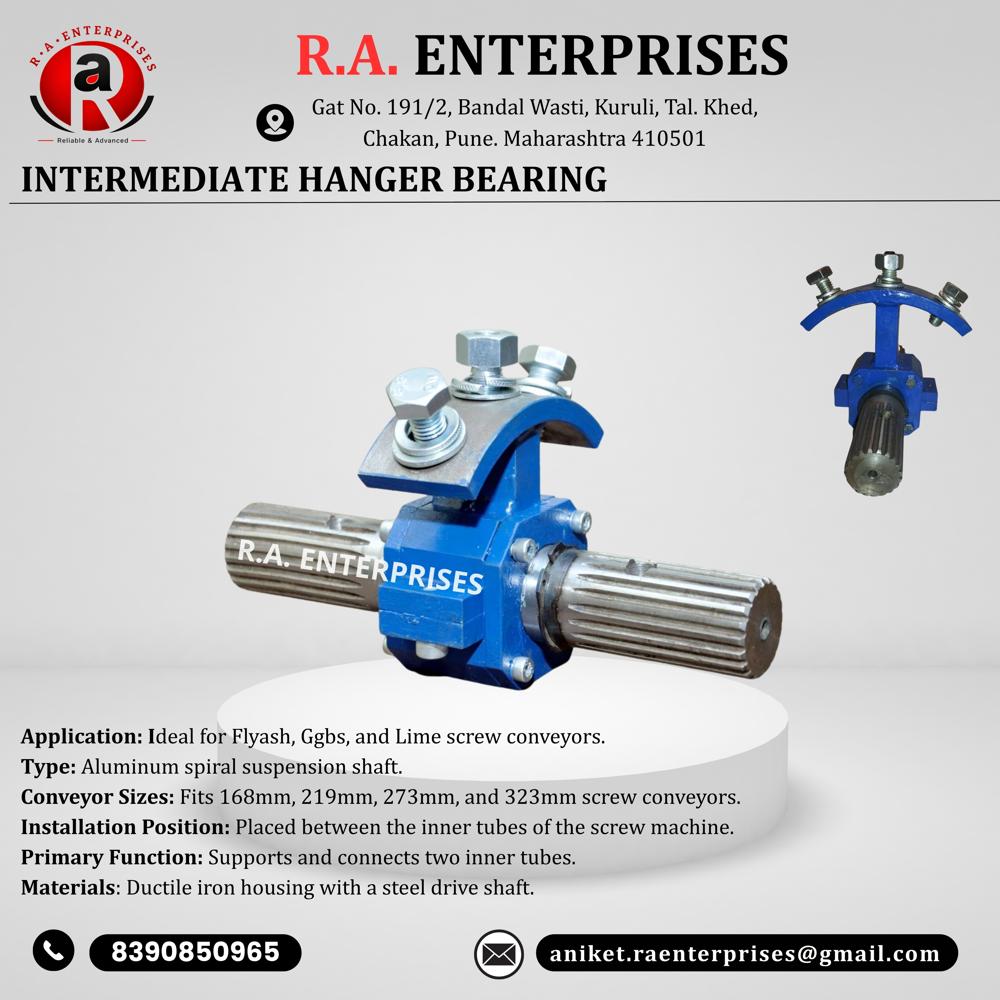
A coupling shaft joins two internal screw sections and transfers torque between them. It may also rotate inside an intermediate hanger bearing.

37. What is screw-flight clocking?

Flight clocking means aligning the flight ends of two connected screw sections so that they form a smoother and more continuous helical path.

38. Why is correct flight clocking important?

Incorrect clocking can interrupt material flow, increase power consumption, create material buildup and produce uneven loading at the screw-section joint.

39. Why do screw flights wear?

Common causes include:

Abrasive material

Excessive rotational speed

Thin flight material

Incorrect screw alignment

Flight contact with the casing

Hardened material buildup

Continuous overloading

Corrosive material

Incorrect material selection

40. Where does flight wear normally occur?

Wear commonly appears on the outer flight edge, inlet section, high-load areas, discharge section and locations where the screw contacts the casing.

41. Why is the flight touching the conveyor casing?

Possible causes include a bent centre pipe, damaged hanger bearing, worn end bearing, incorrect alignment, loose coupling, material buildup or excessive shaft runout.

42. Can worn screw flights reduce capacity?

Yes. Worn flights increase the clearance between the screw and casing, allowing material to slip backwards or remain inside the conveyor.

43. Can a worn screw flight increase power consumption?

Yes. Uneven or damaged flights can cause material buildup, rubbing, imbalance and increased resistance, resulting in higher motor load.

44. Can individual worn flights be repaired?

Localized flight wear may be repaired by welding, hard-facing or replacing damaged flight sections. The complete screw should be checked for alignment and balance after repair.

45. When should the complete internal screw be replaced?

Replacement may be required when the flights are heavily worn, the centre pipe is bent, coupling holes are damaged, multiple welds have failed or the assembly can no longer be aligned reliably.

46. Can RA Enterprises manufacture an internal screw from a sample?

Yes. An internal screw can be manufactured according to an existing sample, approved drawing or accurately measured dimensions.

47. What dimensions are required to manufacture an internal screw?

Important dimensions include:

Overall length

Flight outside diameter

Centre-pipe outside diameter

Centre-pipe thickness

Flight pitch

Flight thickness

Number of flights

Left-hand or right-hand rotation

Drive-shaft dimensions

Tail-shaft dimensions

Coupling-shaft dimensions

Bolt-hole arrangement

Inlet and outlet positions

Material of construction

48. What is a right-hand screw flight?

A right-hand screw moves material in a particular direction according to the direction of shaft rotation. It is the most commonly used flight orientation.

49. What is a left-hand screw flight?

A left-hand screw has the opposite helix direction. It is used where the required material movement or drive rotation is opposite to a standard right-hand arrangement.

50. How do I determine whether the screw is left-hand or right-hand?

The screw orientation should be identified from the existing conveyor drawing, material-flow direction and drive rotation. A sample or clear photograph can also help confirm the helix direction.

51. Why is the internal screw vibrating?

Possible causes include a bent centre pipe, uneven flight wear, incorrect coupling alignment, worn bearings, material buildup, loose connection bolts or an unbalanced screw assembly.

52. Why is the screw conveyor making a rubbing sound?

A rubbing sound may indicate that the flight is touching the casing because of misalignment, worn bearings, a bent screw, material buildup or loose conveyor supports.

53. Why is the screw conveyor not moving material?

Possible causes include incorrect rotation, worn flights, blocked inlet, restricted outlet, broken coupling, low screw speed, excessive inclination or hardened material.

54. Can an internal screw be dynamically balanced?

Balancing may be considered for high-speed or special applications. Most standard industrial screw conveyors primarily require accurate fabrication, straightness, correct alignment and controlled shaft runout.

55. What surface finish can be provided?

Depending on the application, the internal screw may be supplied with:

Painted non-contact surfaces

Primer coating

Galvanized finish

Stainless-steel finish

Polished finish

Hard-facing

Wear-resistant lining or edging

56. What is the price of a screw conveyor internal screw?

The price depends on the diameter, length, pitch, flight thickness, centre-pipe size, material grade, shaft arrangement, wear protection and required quantity.

57. Does RA Enterprises manufacture screw flights and internal screws?

Yes. RA Enterprises manufactures customized screw conveyor flights, shafted internal screws, screw sections, coupling shafts and replacement screw assemblies for cement, fly ash and industrial bulk-material applications.

58. What information is required for a quotation?

Please provide:

Handled material

Required capacity

Conveyor diameter

Overall screw length

Flight outside diameter

Flight pitch

Flight thickness

Centre-pipe diameter and thickness

Shafted or shaftless design

Right-hand or left-hand flight

Drive-shaft dimensions

Tail-shaft dimensions

Coupling details

Material of construction

Existing sample, photographs or drawing

Required quantity

Delivery location

Related Searchable Keywords

Screw conveyor flight

Screw conveyor flights

Screw flight

Auger flight

Helical screw flight

Spiral screw flight

Conveyor screw flight

Internal screw conveyor

Screw conveyor internal screw

Screw conveyor screw assembly

Internal auger assembly

Screw conveyor rotor

Auger conveyor screw

Cement screw conveyor flight

Cement screw internal assembly

Fly ash screw conveyor flight

GGBS screw conveyor flight

Lime screw conveyor flight

Tubular screw conveyor internal screw

U-trough screw conveyor flight

Shafted screw conveyor flight

Shaftless screw conveyor spiral

Helicoid screw flight

Helicoid flighting

Sectional screw flight

Sectional flighting

Standard-pitch screw flight

Full-pitch screw flight

Short-pitch screw flight

Half-pitch screw flight

Variable-pitch screw flight

Tapered screw flight

Double-flight screw conveyor

Double-start screw flight

Ribbon screw flight

Ribbon flight conveyor screw

Paddle screw conveyor

Cut-flight screw conveyor

Cut-and-folded screw flight

Mixing screw flight

Right-hand screw flight

Left-hand screw flight

Mild-steel screw flight

Carbon-steel screw flight

Stainless-steel screw flight

SS304 screw conveyor flight

SS316 screw conveyor flight

Abrasion-resistant screw flight

Heavy-duty screw flight

Hard-faced screw flight

Wear-resistant flight edging

Replaceable screw flight edging

Screw conveyor centre pipe

Screw conveyor center pipe

Screw conveyor coupling shaft

Screw conveyor drive shaft

Screw conveyor tail shaft

Screw conveyor connecting shaft

Screw conveyor coupling bolt

Screw conveyor flight pitch

Screw flight diameter

Screw flight thickness

Screw conveyor flight clearance

Custom screw flight manufacturer

Replacement screw conveyor flight

Screw conveyor internal screw replacement

Cement screw flight manufacturer in India

Screw conveyor internal screw manufacturer in India

Screw flight manufacturer in Pune

Auger flight supplier in Pune

Screw conveyor spare parts manufacturer

Screw conveyor internal screw price in India


Tell us about your requirement
product

Price:

Quantity
Select Unit

  • 50
  • 100
  • 200
  • 250
  • 500
  • 1000+
Additional detail
Mobile number

Email

More Products in Screw Conveyor Spare Parts Category

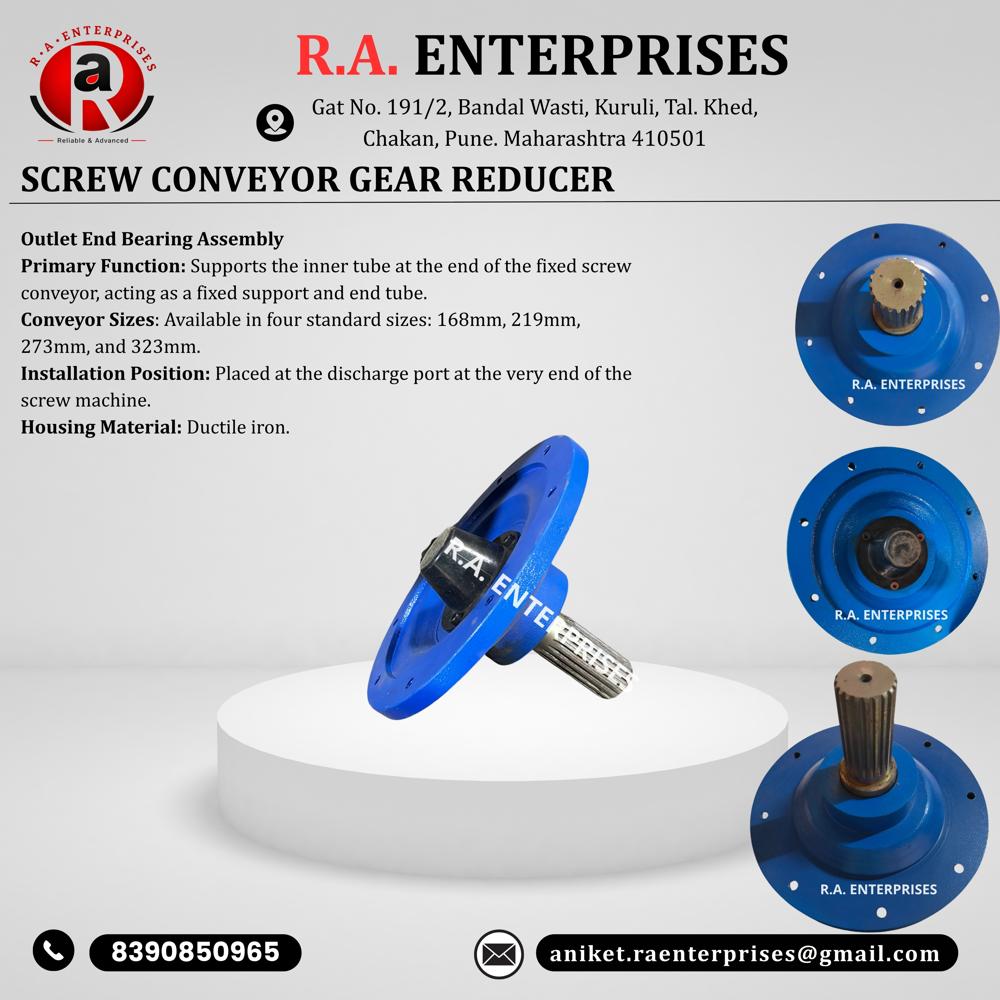
End Bearing Assembly

End Bearing Assembly

Price 4000.00 INR / Number

Minimum Order Quantity : 1 Number

Features : High Quality

Size : Various

Usage & Applications : Industrial

Warranty : Yes

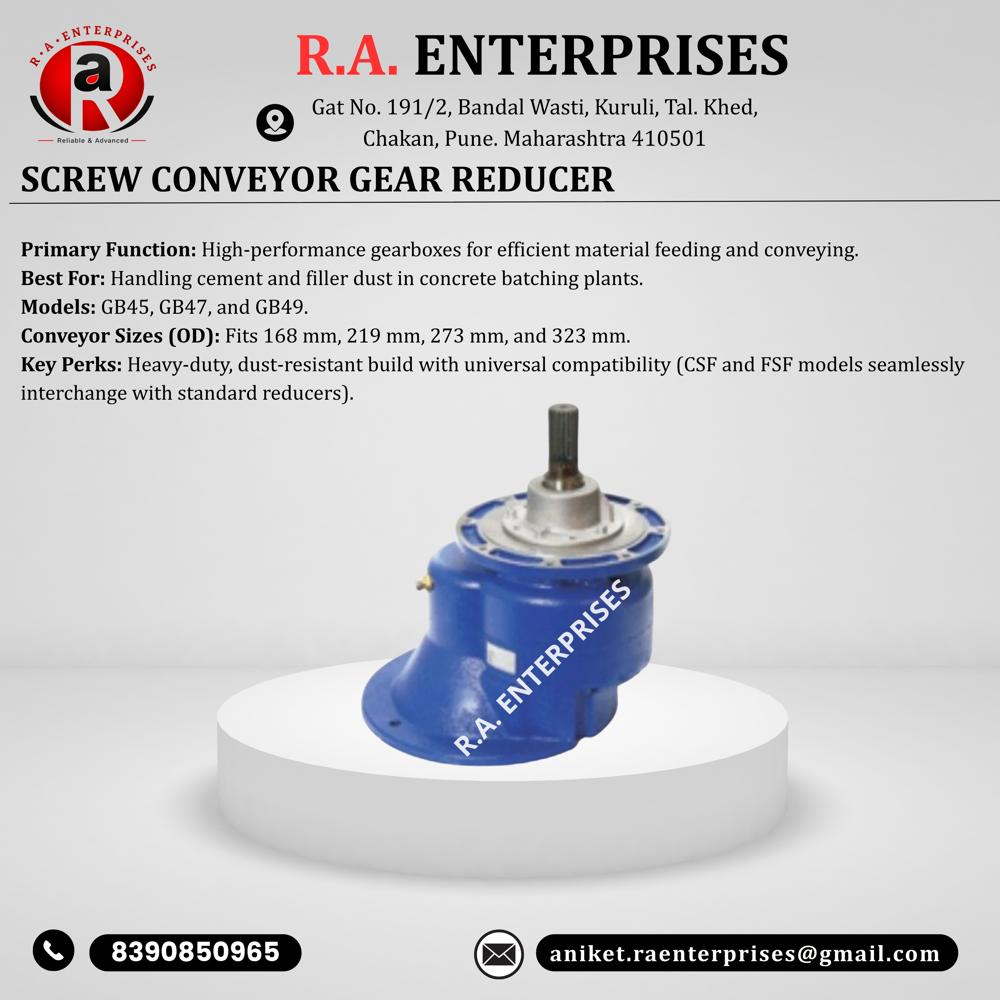
Screw Conveyor Gear Reducer

Screw Conveyor Gear Reducer

Price 28000.0 INR / Unit

Minimum Order Quantity : 1 Unit

Features : High Quality

Size : Various

Usage & Applications : Industrial

Warranty : Yes

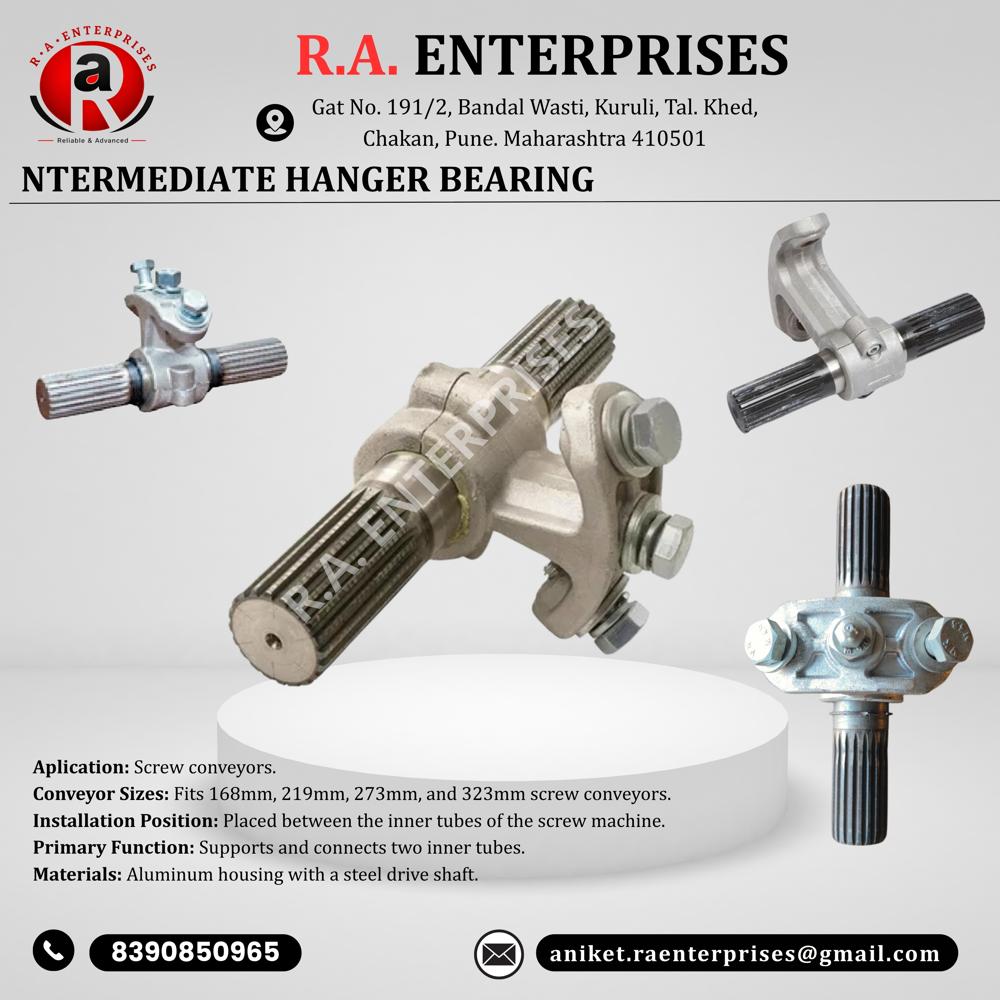
Intermediate Hanger Bearing For Cement Screw Conveyor

Intermediate Hanger Bearing For Cement Screw Conveyor

Price 2500.0 INR / Unit

Minimum Order Quantity : 1 Unit

Features : High Quality

Size : Various

Usage & Applications : Industrial

Warranty : Yes

Intermediate Hanger Bearing For Flyash

Intermediate Hanger Bearing For Flyash

Price 2350.0 INR / Unit

Minimum Order Quantity : 1 Unit

Features : High Quality

Size : Various

Usage & Applications : Industrial

Warranty : Yes


Back to top